Author name: abuzarmohammad7070@gmail.com

Uncategorized

How Performance Marketing Services Help Businesses Grow Faster with the Right Performance Marketing Agency ?

The Complete Guide to Performance Marketing Services and Finding the Right Performance Marketing Agency Marketing has changed dramatically over the past few years. Earlier, businesses relied heavily on traditional advertising like television, newspapers, and billboards. While those methods helped brands reach large audiences, it was very difficult to track the exact results. Today, businesses prefer strategies that focus on measurable outcomes. Instead of guessing whether a campaign worked or not, companies want real data that shows what they are getting from their marketing investment. This is where performance marketing services become extremely valuable. In simple terms, performance marketing is a strategy where businesses pay only when a specific result happens. That result could be a click, a lead, a sign-up, or even a purchase. Because of this results-based approach, many companies choose to work with a professional performance marketing agency that can manage campaigns, track performance, and continuously improve results. In this guide, we will explain how performance marketing services work, what a performance marketing agency actually does, and why strategies like digital advertising, PPC advertising, and lead generation ads are essential for modern business growth. Understanding Performance Marketing Performance marketing is a type of digital marketing where advertisers pay only when a desired action takes place. These actions can include things such as: A user clicking on an advertisement A potential customer filling out a form A user downloading an application A customer purchasing a product Someone subscribing to a newsletter Unlike traditional advertising, performance marketing campaigns are completely measurable. Every click, impression, and conversion can be tracked using analytics tools. Some important characteristics of performance marketing include: Marketing decisions based on real data Transparent campaign performance Efficient use of marketing budgets Continuous optimization of campaigns Strong focus on ROI in performance marketing Because of these advantages, businesses increasingly invest in professional performance marketing services to improve their digital marketing results. Why Businesses Prefer Performance Marketing Services The online marketplace has become extremely competitive. Companies are constantly trying to reach new customers while keeping their marketing budgets under control. Without a clear strategy, advertising money can easily be wasted. This is one of the main reasons businesses rely on professional performance marketing services. Let’s look at some of the biggest benefits. Clear and Measurable Results One of the strongest advantages of performance marketing is that everything can be tracked. Businesses can monitor important metrics such as: CTR CPC Conversion rate ROAS in marketing This data makes it easier to understand what is working and what needs improvement. Better Return on Investment Another major benefit is improved ROI in performance marketing. Instead of spending money on campaigns that may or may not work, businesses invest in marketing strategies that produce measurable results. Some advantages include: Better control over advertising budgets Higher revenue potential Reduced unnecessary spending Companies essentially pay for performance rather than exposure. Advanced Audience Targeting A successful campaign depends heavily on reaching the right audience. This is where an effective ad targeting strategy becomes essential. Modern advertising platforms allow businesses to target users based on: Age and gender Geographic location Interests and hobbies Online behavior Purchase history This level of targeting helps businesses reach people who are most likely to become customers. Faster Lead Generation Many companies use lead generation ads to quickly attract potential customers. These ads are designed to collect useful information such as: Email addresses Phone numbers Customer inquiries A well-planned lead generation strategy can help businesses build a strong database of potential clients. Continuous Campaign Improvement Professional performance marketing services focus on constant improvement. Marketing experts regularly: Test different ad designs Improve ad copy Adjust audience targeting Optimize budgets This process helps create high converting ads that generate better results over time. What Does a Performance Marketing Agency Do? A professional performance marketing agency helps businesses plan, manage, and optimize their advertising campaigns. Their main goal is to generate measurable outcomes such as: Leads Sales Website traffic Customer engagement A good performance marketing agency usually offers several important services. Campaign Planning and Strategy Every successful campaign starts with a strong performance marketing strategy. This involves: Understanding the business goals Identifying the target audience Selecting the best advertising platforms Setting measurable campaign objectives A clear performance marketing strategy helps ensure that campaigns stay focused and effective. Managing Paid Advertising Campaigns Most performance marketing agencies manage advertising campaigns across different platforms. These often include: Meta Ads Facebook Ads Instagram Ads Google Ads YouTube Ads Each platform provides unique opportunities to connect with potential customers. Lead Generation Campaigns Lead generation is one of the most common goals of performance marketing campaigns. Agencies design targeted lead generation ads and optimized landing pages to capture user information. This helps businesses: Increase inquiries Build email lists Generate more sales opportunities Performance Tracking and Reporting Tracking campaign performance is a crucial part of performance marketing services. Marketing teams monitor metrics like: ROAS in marketing CTR CPC Conversion rate These insights help businesses understand whether campaigns are delivering the desired results. Conversion Optimization A key responsibility of a performance marketing agency is improving conversions. This includes optimizing: Ad creatives Landing pages Call-to-action buttons Website user experience The ultimate goal is to increase the conversion rate and maximize campaign profitability. Major Channels Used in Performance Marketing Several digital platforms play an important role in performance marketing campaigns. Each channel has its own strengths. Meta Ads Meta Ads include advertisements shown on Facebook and Instagram. These platforms are widely used because of their advanced targeting options. Benefits of Meta Ads include: Detailed audience targeting Visually engaging ad formats Cost-effective advertising Strong lead generation strategy Businesses often run campaigns such as: Facebook Ads Instagram Ads Retargeting campaigns Conversion campaigns Google Ads Google Ads is one of the most effective tools for PPC advertising. It allows businesses to appear at the top of search results when users search for specific keywords. Advantages include: High-intent traffic Immediate online visibility Reliable performance tracking Common campaign types include: Search ads Display ads Shopping ads Video ads PPC Advertising
why keywords matter in seo for better rankings organic traffic and content optimization
Uncategorized

Why keywords matter in SEO ?

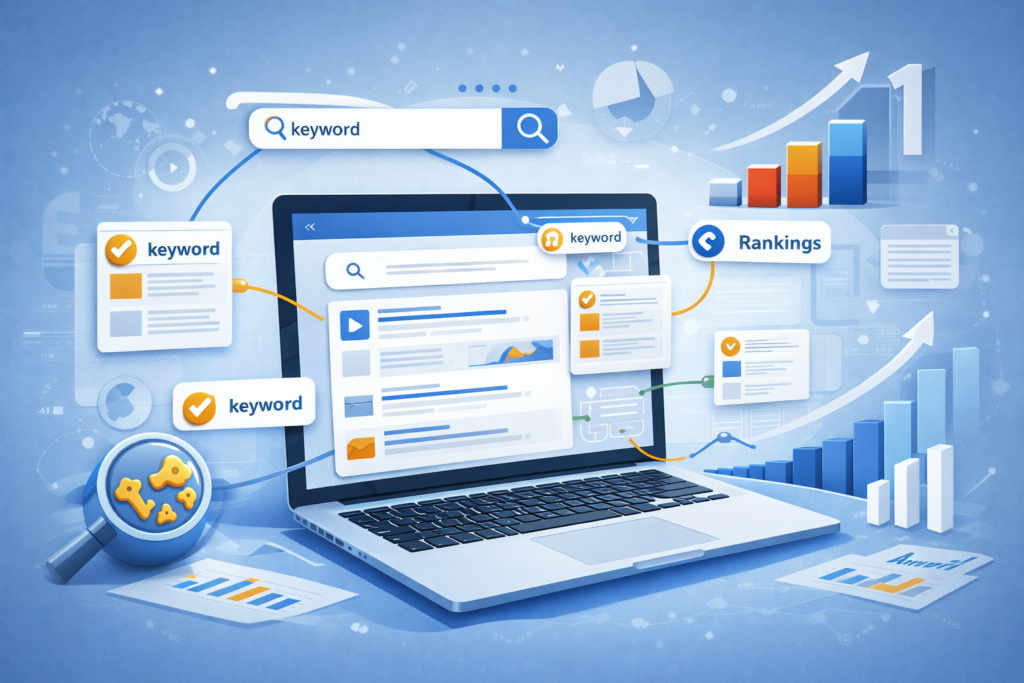
Why Keywords Matter in SEO Search engines are designed to connect users with the most relevant information. Every search starts with a word or phrase typed into a search box. These words are the foundation of how search engines understand content. This is why keywords in SEO play such an important role in ranking and visibility. In the early days of SEO, keywords were often overused and manipulated. Today, search engines are far more advanced. They focus on relevance, intent, and value. Still, keywords remain essential because they help search engines understand what a page is about and when it should appear in search results. This guide explains why keywords matter, how they influence rankings, and how to use them correctly without violating SEO regulations. What Are Keywords in SEO? Keywords are words or phrases that users type into search engines to find information. In SEO, they act as a bridge between what users are searching for and the content you provide. keywords in SEO help search engines categorize content and match it with relevant queries. When used naturally, they improve discoverability without harming user experience. Modern SEO is not about repeating keywords. It is about using them thoughtfully within meaningful content. Why Keywords Still Matter in Modern SEO Some people believe keywords are no longer important. This is not true. Keywords have evolved, not disappeared. Search engines still rely on keywords in SEO to: Understand topic relevance Match content with user queries Identify page context Without keywords, search engines would struggle to determine when your content should appear. The Role of Search Intent Search intent explains why a user searches for something. Understanding search intent is more important than simply choosing popular keywords. There are four main types of intent: Informational Navigational Commercial Transactional When keywords match search intent, content performs better and satisfies users. Keywords and Search Engine Understanding Search engines analyze keywords along with context, structure, and engagement. keywords in SEO act as signals, not commands. Google evaluates: Placement Relevance Supporting context This ensures results are useful, not manipulated. Importance of Keyword Research Choosing the right keywords requires proper keyword research. This process identifies what users are searching for and how competitive those searches are. Good keyword research helps you: Target realistic opportunities Avoid irrelevant traffic Match user expectations Without it, content may never reach the right audience. Keywords vs Topics: The Modern Approach SEO today focuses on topics, but keywords still support them. Topics provide depth, while keywords in SEO provide clarity. A topic without keywords lacks direction. Keywords without topics lack value. Together, they create relevance. How Keywords Influence SEO Rankings Search engines use hundreds of signals, but keywords remain a core factor in SEO rankings. They help: Identify relevance Support ranking algorithms Improve matching accuracy Strong SEO rankings depend on proper keyword alignment, not repetition. Keywords and Organic Traffic Growth Targeting the right keywords brings the right visitors. This is how organic traffic grows sustainably. When content matches user intent and keywords: Bounce rates decrease Engagement increases Trust improves High-quality organic traffic leads to better long-term performance. Keyword Placement Best Practices Where you place keywords matters more than how often you use them. Effective placement includes: Headings Intro paragraphs Natural body mentions Overusing keywords in SEO harms readability and trust. Content Optimization with Keywords Proper content optimization ensures keywords support content instead of dominating it. Good content optimization focuses on: Clarity Structure User value Keywords should blend naturally into helpful explanations. Common Keyword Mistakes to Avoid Many websites fail due to poor practices: Keyword stuffing Ignoring search intent Targeting irrelevant terms Such mistakes can damage SEO rankings and trust. Short-Tail vs Long-Tail Keywords Short-tail keywords bring volume, while long-tail keywords bring precision. Balanced keyword research includes both types to capture different stages of user intent. Keywords and User Experience Search engines reward pages that satisfy users. Keywords should improve clarity, not distract. When keywords align with content optimization, users stay longer and engage more. Measuring Keyword Performance Tracking keyword impact helps refine strategy. Metrics include: Rankings Click-through rate organic traffic Data-driven decisions outperform guesswork. Future of Keywords in SEO Keywords will continue to evolve with AI and semantic search. However, keywords in SEO will remain essential as context signals. Understanding intent and relevance will matter more than exact matches. Best Practices for Safe Keyword Usage Follow these principles: Focus on users first Use keywords naturally Support intent with value Avoid manipulation Ethical SEO builds trust and long-term results. Conclusion Keywords are not outdated. They are refined tools that guide search engines and users. When used correctly, keywords in SEO support relevance, visibility, and growth. Combined with strong keyword research, clear search intent, smart content optimization, and a focus on organic traffic, keywords become powerful assets. SEO success comes from balance—not shortcuts.

off page seo strategies for building backlinks authority and trust
Uncategorized

Importance of Off-Page SEO in Search Engine Results

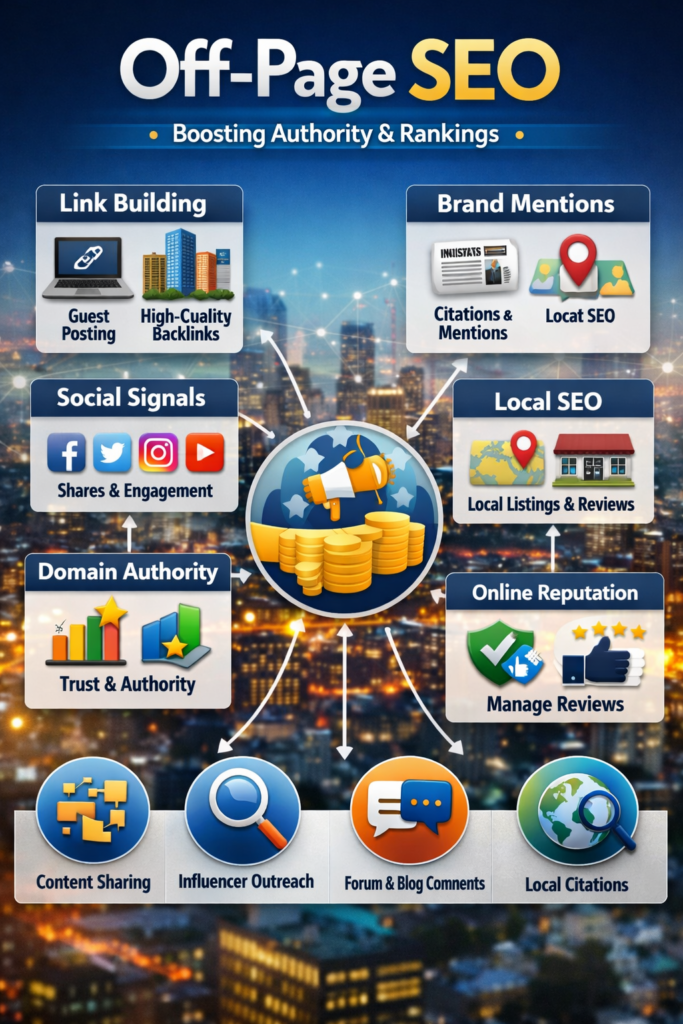
Introduction: Why Off-Page SEO Is the Backbone of Search Rankings Search engine optimization has evolved far beyond just creating content and fixing technical issues. Even if a website is perfectly optimized internally, it may still struggle to rank without external trust signals. This is where Off-Page SEO becomes one of the most powerful elements of a successful SEO strategy. Search engines like Google aim to rank websites that are not only relevant but also trusted across the web. That trust is built largely outside your website. Mentions, links, authority, and reputation all play a critical role in how search engines evaluate your brand. In this guide, you will learn Off-Page SEO from beginner to advanced level, including strategies that follow modern SEO regulations and long-term ranking principles. What Is Off-Page SEO? Off-Page SEO refers to all optimization activities performed outside your website to improve its authority, trustworthiness, and search engine rankings. Unlike on-page or technical optimization, off-page work focuses on how other websites and platforms perceive your site. When reputable sources reference or recommend your website, search engines consider it more credible. Key objectives of off-page optimization include: Building trust Increasing authority Strengthening brand reputation Improving ranking signals Without off-page efforts, even high-quality websites often fail to achieve competitive rankings. Why Off-Page SEO Is Important for Google Rankings Search engines rely heavily on external validation. When multiple credible sources reference your website, it signals that your content provides real value. Off-Page SEO helps Google answer three critical questions: Can this website be trusted? Is this brand recognized in its industry? Do others recommend this content naturally? Websites that lack these signals often struggle to rank, regardless of how good their content is. Off-Page SEO vs On-Page SEO vs Technical SEO A complete SEO strategy includes all three components, but each plays a unique role. On-Page SEO Focuses on content and structure inside the website: Keyword usage Headings Internal linking Content quality Technical SEO Focuses on infrastructure: Crawling Indexing Page speed Mobile optimization Off-Page SEO Focuses on authority and reputation: External references Trust signals Brand credibility Among these, Off-Page SEO acts as the authority-building layer that supports everything else. How Search Engines Measure Authority and Trust Search engines use complex algorithms to determine which websites deserve higher rankings. Authority is not assigned randomly—it is earned over time. Two major evaluation factors include: Quality of references Consistency of brand presence High-quality backlinks from relevant websites act as endorsements. However, not all links carry the same value. Understanding Backlinks and Their Role in SEO Backlinks are links from other websites pointing to your site. They are one of the strongest ranking factors in search algorithms. Search engines analyze: Relevance of linking site Editorial placement Link context Trustworthiness of source Natural backlinks indicate that your content is useful and authoritative, while spammy links can harm rankings. Link Building: The Right Way to Earn Authority Link building is the process of acquiring links from external websites through ethical and value-driven methods. Effective strategies include: Publishing high-quality content Guest contributions on relevant websites Digital PR campaigns Industry partnerships Modern link building is not about quantity—it is about relevance and trust. Types of Backlinks That Actually Matter Not all backlinks are equal. Search engines evaluate links differently based on context and intent. Important types include: Editorial links Contextual links Brand-based references Authority site links Avoid paid or manipulative links, as they violate SEO regulations and may result in penalties. Domain Authority and Its Impact on Rankings Domain authority is a comparative metric that estimates how likely a website is to rank. While not a Google ranking factor directly, it reflects: Link profile strength Content consistency Trust signals Websites with strong domain authority usually rank faster and more consistently in competitive niches. Brand Mentions and Online Reputation Brand mentions occur when other platforms reference your business name, even without linking. Search engines recognize these mentions as trust signals, especially when they come from: News websites Industry blogs Social platforms Business directories Positive brand presence strengthens credibility and supports long-term rankings. Social Signals and SEO Visibility Social signals do not directly impact rankings, but they amplify content reach and brand recognition. Benefits include: Increased content exposure More engagement opportunities Higher chances of earning natural links A strong social presence indirectly supports off-page authority growth. White-Hat Off-Page SEO Strategies That Work Sustainable SEO requires ethical practices that align with search engine guidelines. Effective strategies: Content-driven outreach Relationship-based promotion Authority partnerships Thought leadership These methods support link building without risking penalties. Local Off-Page SEO and Trust Signals Local visibility depends heavily on off-page factors. Key elements include: Business citations Reviews Local references Community mentions Strong Off-Page SEO helps local businesses compete even against larger brands. Common Off-Page SEO Mistakes to Avoid Many websites damage their rankings due to poor practices. Avoid: Spammy link building Irrelevant directories Automated links Paid link schemes Such tactics may lead to algorithmic or manual penalties. White-Hat vs Black-Hat Off-Page SEO Black-hat techniques aim for short-term gains but carry long-term risks. White-hat strategies focus on: Value creation Ethical outreach Trust building Search engines reward sustainable efforts and penalize manipulation, especially involving unnatural backlinks. Off-Page SEO Checklist (Beginner to Advanced) Beginner Level Brand consistency across platforms Basic outreach Social presence Advanced Level Authority partnerships Editorial mentions Trust-focused Off-Page SEO Reputation management Future of Off-Page SEO Search engines are moving toward deeper trust evaluation. Future trends include: Brand authority analysis Expertise recognition Entity-based ranking Websites with strong domain authority and consistent reputation will dominate search results. Conclusion: Off-Page SEO Is a Long-Term Strategy Off-Page SEO is not about shortcuts. It is about building real authority, trust, and credibility over time. When supported by ethical link building, strong content, and genuine brand presence, off-page optimization delivers sustainable rankings. SEO success is not earned overnight—but with patience and the right approach, it becomes permanent.

on page seo guide for improving google rankings
Uncategorized

How On-Page SEO Helps Improve Website Rankings?

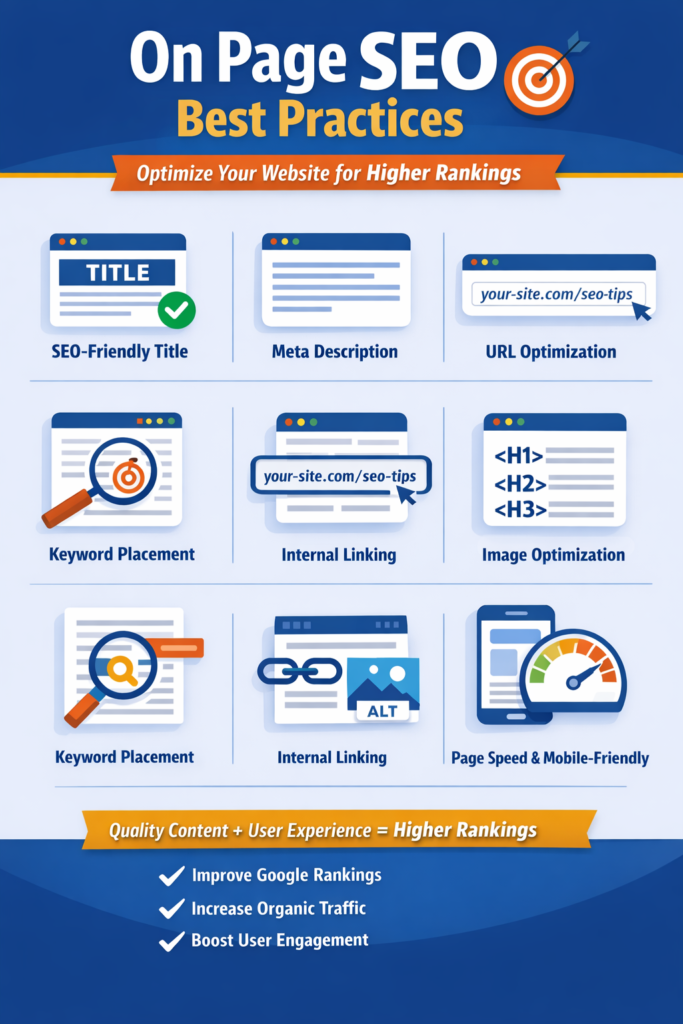
On Page SEO: A Complete and Practical Guide to Improve Google Rankings Introduction: Why On Page SEO Matters in Modern SEO Creating content is easy, but making it rank on Google is not. Thousands of websites publish similar articles every day, yet only a few appear on the first page. The major difference between ranking and non-ranking content is On Page SEO. On Page SEO ensures that search engines clearly understand your content and users get the best possible experience. Without proper optimization, even high-quality content may never reach its target audience. This guide explains On Page SEO from beginner to advanced level, strictly following Google’s latest SEO regulations. What Is On Page SEO? On Page SEO is the practice of optimizing individual web pages to rank higher in search engines and gain relevant organic traffic. It focuses on both content quality and technical structure of a webpage. In simple words: On Page SEO = Content Optimization + Page Structure + User Experience Key Elements of On Page SEO Keyword optimization Title tag Meta description Header tags URL structure Internal linking Image optimization Content quality Page speed Mobile friendliness Schema markup EEAT signals On Page SEO vs Off Page SEO Factor On Page SEO Off Page SEO Control Full control Limited control Focus Website content & structure External authority Examples Keywords, headings, meta tags Backlinks, brand mentions Goal Relevance & usability Trust & authority A strong On Page SEO foundation is mandatory before investing in off-page strategies. Keyword Research: The Base of On Page SEO Every SEO strategy starts with keyword research. Choosing the right keywords ensures that your content matches user intent. Types of SEO Keywords Primary keyword Secondary keywords LSI keywords Long-tail keywords Example: Primary: On Page SEO Secondary: On Page SEO techniques LSI: SEO optimization, Google ranking factors Long-tail: how to do on page SEO step by step Keyword stuffing should always be avoided. Title Tag Optimization The title tag is one of the strongest ranking signals in On Page SEO. SEO Best Practices Length between 50–60 characters Include primary keyword Clear and compelling wording Example:On Page SEO Guide 2025 – Improve Website Rankings Meta Description Optimization While not a direct ranking factor, a well-written meta description improves click-through rate. Best Practices 150–160 characters Include primary keyword Focus on value and clarity SEO-Friendly URL Optimization A clean URL structure improves both usability and crawlability. Bad URL:example.com/page?id=234 Good URL:example.com/on-page-seo-guide URL Optimization Rules Use hyphens Avoid unnecessary words Include primary keyword Header Structure (H1–H6) Headers organize content and improve readability. Proper Usage H1 for main topic (only once) H2 for main sections H3 for subpoints Incorrect header hierarchy can harm SEO performance. First 100 Words Optimization Search engines give extra importance to the first part of content. Optimization Rules Include primary keyword Clearly define topic Avoid filler text This helps Google quickly understand page relevance. Content Quality and Helpful Content Guidelines Google ranks content written for users, not for algorithms. High-Quality Content Should Be Original and in-depth Informative and practical Well-structured Updated and accurate Easy to read Low-quality or duplicated content can negatively impact rankings. Keyword Placement According to SEO Regulations Keywords must be placed naturally. Ideal Placement Areas Title tag Meta description First paragraph Headings Body content Image ALT text Conclusion Over-optimization should always be avoided. Internal Linking Strategy Internal linking improves website structure and helps distribute authority. Benefits Better crawlability Improved user navigation Reduced bounce rate Strong topical relevance Links should always be relevant and contextual. Image Optimization for SEO Images enhance engagement but must be optimized properly. Image SEO Checklist Compressed file size Descriptive file names ALT text with keywords Responsive display Page Speed Optimization Page speed is a confirmed ranking factor. Optimization Techniques Compress images Enable caching Minify CSS and JavaScript Use fast hosting Implement CDN Faster pages improve both SEO and user experience. Mobile Friendliness and Mobile-First Indexing Google primarily evaluates the mobile version of websites. Mobile SEO Requirements Responsive design Easy navigation Fast loading speed Proper font and button sizes A non-mobile-friendly site struggles to rank. Schema Markup (Advanced On Page SEO) Schema markup provides structured data to search engines. Benefits Rich search results Better visibility Higher CTR Common schemas include FAQ, Article, and Breadcrumb. EEAT and Trust Signals Google evaluates content based on EEAT. EEAT Includes Experience Expertise Authoritativeness Trustworthiness Adding author details, real examples, and secure browsing improves trust. Common On Page SEO Mistakes Keyword stuffing Duplicate content Missing meta tags Poor internal linking Slow page speed Ignoring mobile optimization Avoiding these mistakes improves long-term rankings. On Page SEO Checklist SEO-optimized title Clear meta description Clean URL structure Proper header hierarchy Strategic keyword placement Internal links Optimized images Fast loading speed Mobile-friendly design Schema implementation Conclusion: Why On Page SEO Is Essential On Page SEO is the foundation of every successful SEO strategy. When content is optimized correctly and users are prioritized, search engines reward websites with better rankings and sustainable traffic. SEO is a continuous process. Regular updates, optimization, and quality improvements ensure long-term success. SEO Meta Data Meta Title:On Page SEO Guide – Complete Optimization for Higher Rankings Meta Description:Learn complete On Page SEO techniques to improve Google rankings, organic traffic, and website performance using proven SEO practices.

Uncategorized

What Is SEO and Why It Is Important for Website Ranking?

What Is SEO and How Search Engines Really Work: A Complete Beginner-Friendly Guide If you own a website, manage an online business, or create content for the web, you have likely heard about SEO. Many people talk about ranking on Google, getting free traffic, or optimizing websites, but very few truly understand what SEO means and how search engines actually work behind the scenes. In real projects, I have seen websites with good content fail simply because they ignored the basics of Search Engine Optimization. SEO is not a trick or a shortcut. It is a structured process that helps search engines understand your website and helps users find exactly what they are looking for. This blog explains SEO in simple English and clearly breaks down How Search Engines Work, step by step. What Is SEO? SEO stands for Search Engine Optimization. It is the practice of improving a website so that it appears higher in organic search results when users search for related information. SEO helps your website: Reach the right audience Get consistent organic traffic Build long-term visibility Unlike paid ads, SEO focuses on earning traffic naturally from search engines. Why SEO Is Important in Today’s Digital World The internet is highly competitive. Millions of pages are published daily, and search engines must choose which ones deserve attention. SEO matters because: Most online journeys start with a search engine Users trust organic results more than ads SEO improves User Experience It delivers long-term growth From experience, websites that invest in SEO early tend to grow faster and more sustainably. SEO Is More Than Just Keywords Many beginners believe SEO is only about keywords. In reality, modern SEO covers much more. SEO today includes: Content quality Website performance Website Structure Mobile usability Technical health Search engines reward websites that are useful, fast, and reliable. How Search Engines Really Work To understand SEO properly, you must understand How Search Engines Work. Search engines like Google follow a three-step process to deliver results. The three main stages are: Crawling Indexing Ranking Let’s explain each stage in a simple way. Crawling: How Search Engines Discover Pages Crawling is the process where search engines send automated programs known as Search Engine Bots to explore websites. This process is also called Website Crawling. These bots: Visit pages Follow internal and external links Discover new or updated content If your website cannot be crawled, it will not appear in search results. Indexing: How Search Engines Store Content After crawling a page, search engines decide whether to store it in their database. This step is called Indexing in SEO. Indexing means: Google understands your content Your page becomes eligible to rank Pages may fail to get indexed due to duplicate content, technical errors, or poor quality. Ranking: How Google Chooses the Best Results Once a page is indexed, Google decides where it should appear in search results. This decision is based on hundreds of signals known as Google Ranking Factors. Important ranking factors include: Content relevance Page speed Mobile usability Backlinks User Experience Google’s goal is to provide the most helpful answer to users. Understanding Search Intent Search Intent refers to the reason behind a user’s search. Understanding intent helps create content that ranks. Types of search intent: Informational Navigational Commercial Transactional SEO works best when content matches user intent. On-Page SEO: Optimizing Content On-Page SEO focuses on optimizing individual pages so search engines understand them better. Key elements include: Title tags Meta descriptions Headings Keyword placement Internal Linking Strong on-page SEO improves readability and relevance. Technical SEO: The Foundation of SEO Technical SEO ensures that your website works properly behind the scenes. It focuses on: Website speed Mobile optimization Secure connections Crawlability and indexing In many audits, fixing technical SEO issues alone has improved rankings significantly. Website Speed and SEO Website speed is a critical ranking signal. Slow websites lead to poor User Experience and higher bounce rates. Fast websites: Rank better Retain users longer Convert better Optimizing images, scripts, and hosting plays a big role here. Mobile-First Indexing Explained Google uses Mobile-First Indexing, meaning it evaluates the mobile version of your site first. If your site is not a Mobile Friendly Website: Rankings may drop Traffic can decrease Responsive design is essential. SEO vs Paid Advertising Many people confuse SEO with paid ads. Key difference: SEO brings Organic Traffic Ads stop working when the budget stops Both can work together, but SEO builds long-term value. Common SEO Myths Some common misconceptions: SEO gives instant results SEO is dead SEO is only about keywords In reality, SEO is a long-term SEO Strategy that evolves with search engines. Real-World SEO Experience I have seen websites with fewer backlinks outperform competitors simply because: Their content quality was higher Their Website Structure was cleaner Their technical SEO was strong SEO rewards consistency and value. How Long Does SEO Take to Show Results? SEO requires patience. Typical timelines: Small changes: 1–3 months Strong results: 6–12 months Anyone promising instant rankings is not being honest. SEO Is About Users, Not Just Algorithms Modern SEO prioritizes users. When a website offers value, clarity, and speed, search engines naturally reward it. SEO aligns user needs with search engine goals. The Future of SEO SEO is evolving with: AI-driven search Voice search Better understanding of intent However, quality and trust will always matter. Final Thoughts Understanding Search Engine Optimization and How Search Engines Work is essential for building a successful online presence. SEO is not about shortcuts or manipulation. It is about helping users while making your website easy for search engines to understand. When crawling, indexing, and ranking are clear to you, SEO becomes logical instead of confusing. With the right SEO Strategy, patience, and consistency, long-term growth is achievable.

Technical seo - website crawling
Uncategorized

What Is Technical SEO? A Step-by-Step Guide for Better Rankings

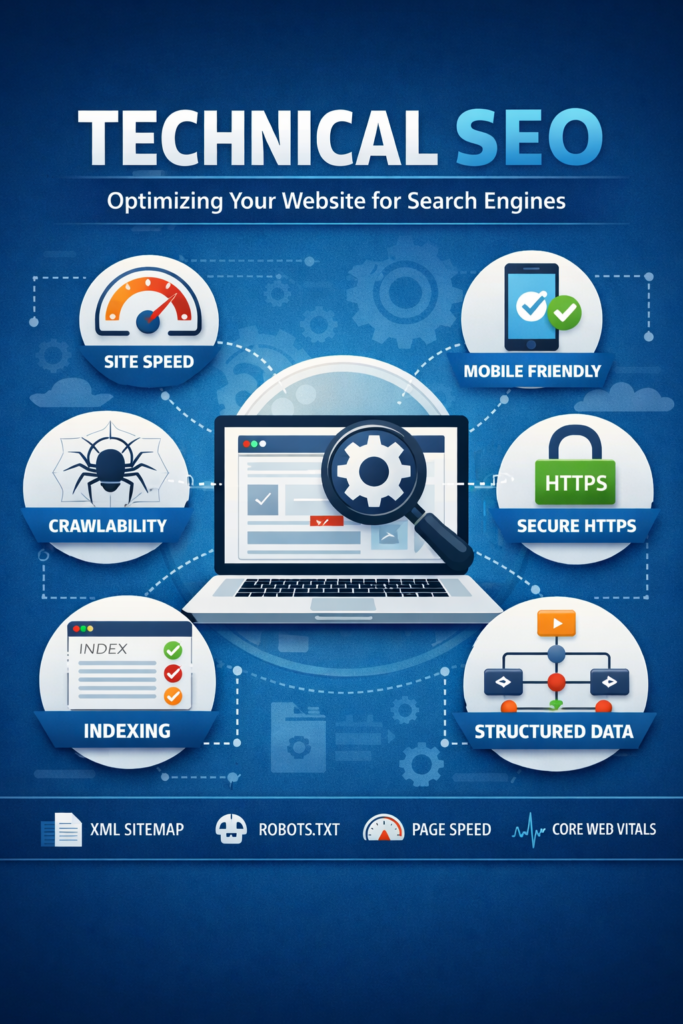
Introduction: Why Technical SEO Matters More Than Ever ? Search engines have evolved rapidly. Today, ranking on Google is not only about keywords or backlinks. If your website has technical issues, even the best content may never rank. This is where Technical SEO becomes critical. In simple terms, Technical SEO focuses on optimizing the technical foundation of a website so search engines can easily crawl, understand, and index your pages. A technically strong website improves user experience, loading speed, and search visibility. If Google cannot access your site properly due to poor Website Crawling or broken technical elements, your rankings will suffer. That is why mastering Technical SEO is no longer optional—it is essential. This guide explains everything you need to know about Technical SEO, from basic concepts to advanced optimization strategies, in a clear and practical way. What Is Technical SEO? Refers to optimizing the backend structure and infrastructure of a website to help search engines crawl, index, and rank pages efficiently. Unlike content SEO, Technical SEO does not focus on writing articles or building links. Instead, it ensures your website meets technical requirements such as: Fast loading pages Mobile responsiveness Secure HTTPS connection Clean site architecture Proper Search Engine Indexing Without strong Technical SEO, search engines may struggle with Website Crawling, resulting in lower visibility. Technical SEO vs On-Page SEO vs Off-Page SEO Understanding the difference helps you build a complete SEO strategy. On-Page SEO Focuses on content and HTML elements such as: Keywords Headings Meta tags Internal links Off-Page SEO Focuses on authority and trust: Backlinks Brand mentions Social signals Technical SEO Focuses on infrastructure: Website Crawling Search Engine Indexing Page Speed Optimization Core Web Vitals Among all three, Technical SEO acts as the foundation. How Search Engines Work: Crawling, Indexing, and Ranking To understand Technical SEO, you must know how search engines operate. Website Crawling Explained Website Crawling is the process where search engine bots (like Googlebot) discover web pages by following links. If your site structure is poor, Website Crawling becomes inefficient. This can lead to pages being ignored or delayed in rankings. Factors affecting Website Crawling: Broken links Crawl budget wastage Incorrect robots.txt Poor internal linking Improving Website Crawling is one of the primary goals of Technical SEO. Search Engine Indexing Explained After crawling, pages are stored in Google’s database. This process is called Search Engine Indexing. If a page is not indexed, it will never appear in search results. Common Search Engine Indexing issues: Duplicate content Noindex tags Canonical errors Thin content A strong Technical SEO setup ensures proper Search Engine Indexing for all important pages. XML Sitemap and Robots.txt: The Gatekeepers XML Sitemap An XML sitemap helps search engines understand your site structure and supports Website Crawling. Benefits: Faster Search Engine Indexing Better discovery of new pages Improved Technical SEO health Robots.txt Robots.txt controls which pages bots can crawl. Incorrect configuration can block Website Crawling and damage your Technical SEO. Best practice: Never block important pages Regularly audit robots.txt Site Architecture and URL Structure A clean site architecture improves both user experience and Technical SEO. Best Practices: Flat structure (important pages within 3 clicks) Logical categories SEO-friendly URLs Good architecture improves Website Crawling, supports Search Engine Indexing, and strengthens overall Technical SEO. Mobile-First Indexing and Responsive Design Google now uses mobile-first indexing. This means the mobile version of your site is used for ranking. If your site is not mobile-friendly: Search Engine Indexing may be affected Core Web Vitals scores may drop Rankings may decline Mobile optimization is a core part of Technical SEO today. Core Web Vitals: Performance Signals That Matter Core Web Vitals are user experience metrics that Google uses as ranking signals. The Three Core Web Vitals LCP (Largest Contentful Paint) – Loading performance INP (Interaction to Next Paint) – Interactivity CLS (Cumulative Layout Shift) – Visual stability Improving Core Web Vitals enhances user satisfaction and strengthens Technical SEO. Poor Core Web Vitals often result from weak Page Speed Optimization and bad front-end practices. Page Speed Optimization: Why Speed Equals Rankings Page Speed Optimization directly impacts user experience and conversions. A slow site: Increases bounce rate Reduces crawl efficiency Hurts Core Web Vitals Key Page Speed Optimization Techniques Image compression Browser caching Minifying CSS & JavaScript Using CDN Reducing server response time Effective Page Speed Optimization improves Website Crawling and overall Technical SEO. HTTPS and Website Security Security is a trust signal. HTTPS: Protects user data Improves trust Is a ranking factor Without HTTPS, Technical SEO suffers, and Search Engine Indexing may be limited for sensitive pages. Canonical URLs and Duplicate Content Duplicate content confuses search engines and wastes crawl budget. Canonical tags: Indicate the preferred version of a page Improve Search Engine Indexing Strengthen Technical SEO Always audit canonical issues as part of Technical SEO maintenance. Schema Markup and Structured Data Schema markup helps search engines understand content context. Benefits: Rich snippets Better CTR Improved Search Engine Indexing Although schema is not a direct ranking factor, it supports Technical SEO and visibility. Common Technical SEO Mistakes Avoid these mistakes: Blocking important pages in robots.txt Ignoring Core Web Vitals Poor Page Speed Optimization Broken internal links Duplicate URLs Fixing these issues dramatically improves Technical SEO performance. Technical SEO Checklist (Beginner to Advanced) Beginner Checklist XML sitemap submitted HTTPS enabled Mobile-friendly design Clean URLs Advanced Checklist Optimize Core Web Vitals Improve Website Crawling Fix Search Engine Indexing errors Advanced Page Speed Optimization Final Thoughts: Technical SEO Is a Long-Term Investment Technical SEO is not a one-time task. It is an ongoing process that ensures your website remains accessible, fast, secure, and user-friendly. By improving Website Crawling, fixing Search Engine Indexing issues, optimizing Core Web Vitals, and focusing on Page Speed Optimization, you build a strong technical foundation that supports long-term rankings. If content is the heart of SEO, then Technical SEO is the backbone. Lorem ipsum dolor sit amet, consectetur adipiscing elit. Ut elit tellus, luctus nec ullamcorper mattis, pulvinar dapibus leo. Lorem ipsum dolor sit amet, consectetur adipiscing

Uncategorized

Certified Google Ads Specialist for High-ROI Campaigns

Google Ads Services – Drive Instant Traffic & Sales Google Ads is one of the most effective online advertising platforms for businesses that want immediate visibility, qualified leads, and measurable results. With the help of a professional Google Ads specialist, your business can appear at the top of Google search results exactly when customers are searching for your services. What Is Google Ads? Google Ads is a pay-per-click (PPC) advertising platform by Google that allows businesses to: Advertise on Google Search results Display ads across websites and mobile apps Run video ads on YouTube Promote products through Google Shopping You only pay when users click on your ads, making Google Ads a cost-effective and performance-driven marketing solution. Why Hire a Google Ads Specialist? A certified Google Ads specialist ensures your campaigns are properly structured, optimized, and profitable. Benefits of Working with a Google Ads Specialist: In-depth keyword research and targeting High-converting ad copy creation Smart bidding strategy and budget control Ongoing campaign optimization Accurate conversion tracking and reporting Google Ads Expert Services We Offer As a trusted Google Ads expert, we provide end-to-end campaign management tailored to your business goals. Our Google Ads Services Include: Google Search Ads setup and optimization Google Display Ads for brand awareness Google Shopping Ads for eCommerce stores YouTube Ads and video campaigns Remarketing and retargeting ads Google Analytics and conversion tracking setup Types of Google Ads Campaigns Search Ads Text ads shown on Google search results Ideal for high-intent keywords Display Ads Banner and image ads across Google partner websites Great for brand awareness Shopping Ads Product-based ads with images and prices Best for online stores Video Ads Engaging video ads on YouTube Excellent for brand storytelling Remarketing Ads Target users who previously visited your website Increases conversion rates Benefits of Google Ads for Your Business Instant visibility on Google Target specific locations, devices, and audiences Full control over ad spend and budget Measurable results and real-time data Higher ROI compared to traditional advertising Why Choose Us as Your Google Ads Expert? Certified and experienced Google Ads expert Data-driven advertising strategies Transparent reporting and performance insights Customized campaigns for your industry Proven track record of increasing leads and sales Get Started with Google Ads Today If you’re ready to grow your business with Google Ads, partner with a professional Google Ads specialist who understands how to maximize performance and minimize costs.

Scroll to Top